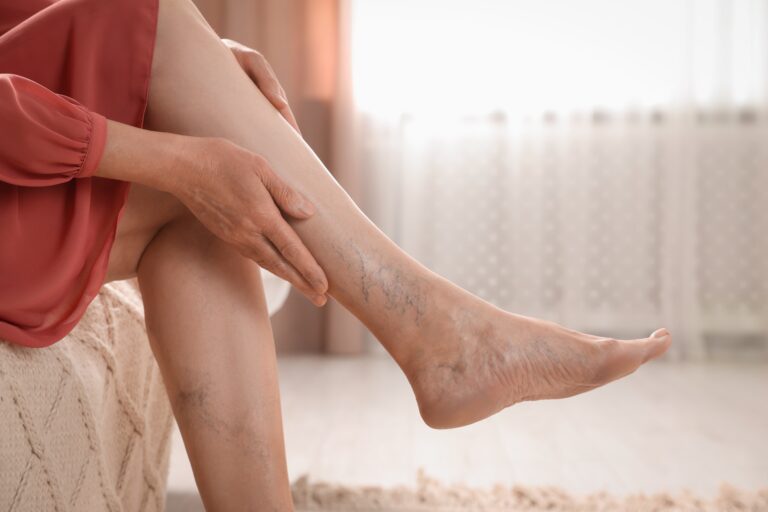
That brown stain around your ankle, the swelling that shows up by afternoon, the itching that won’t quit- these aren’t a skin problem. They’re a sign that the veins in your leg are struggling to move blood back up to your heart, and the skin is where the trouble shows first. Caught early, it’s very manageable. Left alone, it can progress to an open sore that’s slow to heal. Here’s how to tell where you are and what to do about it.
What’s Causing It
Your leg veins move blood uphill, against gravity, using one-way valves that stop blood from sliding back down between steps. When those valves wear out, blood pools in the lower leg and pressure builds. That’s venous insufficiency, and it’s the root of almost everything below. As the pressure climbs, the small vessels in your skin start to leak. Blood escapes into the tissue and breaks down, leaving iron behind, and that iron stains the skin the rusty brown you’re seeing. The same pressure slowly starves the surrounding tissue of oxygen. If it goes on long enough, the skin breaks down and a wound forms. This is a venous ulcer, and it’s the most common kind of leg ulcer, especially as people get older.
Early Signs Most People Miss
In the early stage, the skin can turn red and itchy before anything looks like a wound. Watch for:
● A sock line above the ankle that won’t fade
● Heaviness or aching in the leg by the end of the day
● Swelling around the ankle, worse in the afternoon, better after your legs are up overnight
● Brown or reddish discoloration around the inner ankle
● Itching, tingling, or dry, flaky skin near the ankle
● Skin that starts to feel firm or hardened
Signs It’s Advancing
As it progresses, the skin thins, breaks, and starts to weep. At this stage, you may see:
● A shallow sore, often near the inner ankle, with a red rim
● Yellowish tissue over the wound
● Skin around it that’s shiny, tight, or warm
● Pain in the leg
● Odor or discharge if the wound gets infected
A wound like this won’t heal on its own, and creams won’t address the cause. If you’re already here, you need to have it checked.
Who’s Most at Risk
Some things make venous disease more likely to reach the ulcer stage:
● A history of vein problems or blood clots in the leg
● Standing or sitting for long stretches without moving
● Being overweight
● Smoking
● A past leg injury
● Not much physical activity
● Diabetes, which affects both circulation and healing
What to Expect
During your first visit, we examine your legs to determine whether you have vein or circulation problems or varicose veins. Our experienced staff uses ultrasound imaging to get a clear picture of the veins in your legs, painless and no needles. It takes well under an hour and shows exactly which valves have failed and where blood is leaking backward- the full story the skin has only been hinting at. If there’s any question about blood flow into the foot, we check that too before recommending anything, because it changes what treatment is safe.
How We Treat Vein Disease
Years ago, varicose veins were treated with vein stripping, a highly invasive operation. Patients were put under general anesthesia, and recovery often took six months or more. Treatment has come a long way since then.
The treatments we offer at Medical Vein Clinic:
● Require no surgery
● Use only a local anesthetic to numb the leg
● Let patients walk in and walk out, drive home, or go back to work the same day
The goal is always the same: bring the pressure down, protect the skin, and either close an existing wound or prevent one from forming. If there’s an open sore, that includes proper wound care alongside treating the vein that caused it, because dressing a wound without fixing the underlying vein just sets it up to return.
Preventing It in the First Place
Almost every venous ulcer we treat could have been headed off by treating the vein disease earlier. To lower your risk:
● Get vein disease evaluated early, before it reaches this stage
● Wear compression stockings if they’ve been recommended for you
● Elevate your legs after long periods of sitting or standing
● Keep moving through the day and exercise regularly
● Lose extra weight if that applies to you
● Quit smoking
● Take care of your feet, especially if you have diabetes
● Keep up with regular vascular check-ups
When to Get Seen
Book an evaluation for ongoing ankle swelling, brown discoloration, itching or a rash that keeps returning, visible veins around the ankle, or any sore that’s slow to heal.
Get seen right away for redness spreading up the leg with fever, a foot that turns cold, pale, blue, or numb, heavy bleeding from a vein, or sudden swelling and pain in one leg, particularly if you’ve had a clot before.
Frequently Asked Questions
How is a venous ulcer different from other leg wounds?
Venous ulcers usually sit near the inner ankle, tend to be shallow with irregular edges, and often come with swelling, brown staining, and visible veins. Wounds caused by artery problems or nerve damage look and behave differently, which is why getting the cause right matters before any treatment starts.
How long does a venous ulcer take to heal?
With the right treatment, many improve over weeks. The key is treating the vein causing it, not just dressing the wound, or it tends to come back.
Can it come back after it heals?
Yes, if the underlying vein problem is left untreated. Closing the failed vein is what lowers the odds of it returning in the same spot.
Does smoking affect healing?
It does. Smoking narrows blood vessels and slows healing, so quitting makes a real difference in whether a wound closes and stays closed.
When should I see a specialist?
When the sock line won’t fade, the ankle starts to swell, the skin turns brown, or a sore won’t close. Earlier is always easier to treat.
Schedule Your Vein Evaluation
If any of this sounds like your legs, our team at Medical Vein Clinic® can help. We accept most insurance and have two San Antonio locations. Call to schedule your evaluation: 210-622-8000.