
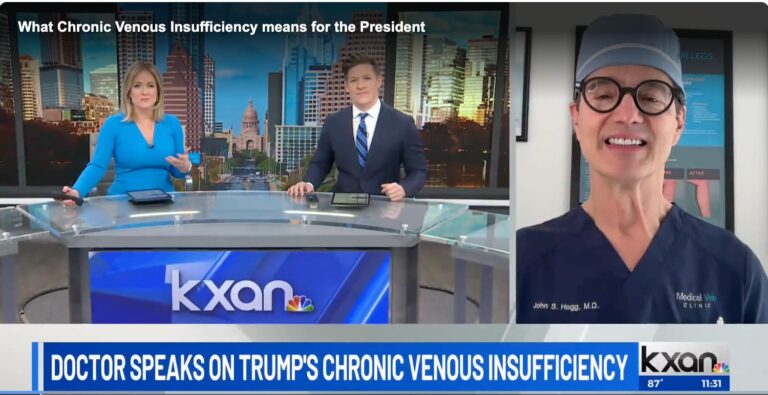
By Dr. John Hogg, MD, DABR, DABVLM — Founder and Board-Certified Vascular Specialist, Medical Vein Clinic San Antonio | Published August 5, 2025 | As interviewed on KXAN NBC Austin
What Is Chronic Venous Insufficiency (CVI)?
Chronic venous insufficiency, or CVI, occurs when the one-way valves inside leg veins fail, preventing blood from flowing efficiently back to the heart. Blood pools in the lower legs, starving tissues of oxygen and causing progressive swelling, skin changes, aching, restless legs, varicose veins, and eventually ulcers. CVI affects an estimated 40% of the U.S. population. In San Antonio, rates are even higher due to aging demographics, occupational hazards like prolonged sitting and standing, and a large Hispanic population that carries a genetic predisposition to vein disease. CVI is a progressive condition — it does not improve on its own. Left untreated, it increases the risk of blood clots, lymphedema, chronic wounds, and permanent tissue damage. Medical Vein Clinic in San Antonio diagnoses and treats CVI using minimally invasive outpatient procedures covered by most insurance plans. Dr. John Hogg, the clinic’s founder and board-certified vascular specialist, was recently interviewed on KXAN NBC Austin about CVI after a high-profile national diagnosis brought the condition into public conversation. Dr. Hogg is a board-certified radiologist specializing in vascular and interventional radiology with more than 30 years of experience, and he and his team at the Medical Vein Clinic offer minimally invasive treatments.
When a High-Profile CVI Diagnosis Brought a Hidden Condition Into the Spotlight
I recently did an interview with KXAN (the NBC affiliate in Austin, Texas) about President Trump’s chronic venous insufficiency (CVI) diagnosis. This high-profile case shines a light on a condition that affects millions of Americans yet remains largely misunderstood and undertreated.
At Medical Vein Clinic, we consistently see a lack of awareness of chronic venous insufficiency, a progressive condition that can lead to serious complications, including blood clots, lymphedema, and even tissue death if left untreated.
Why CVI Is More Than a Comfort Problem — The Blood Clot Risk
In layman’s terms, chronic venous insufficiency is poor circulation of blood from the legs back to the heart. When the one-way valves in your leg veins fail, blood pools in your lower extremities instead of returning efficiently to your heart. This pooled blood starves tissues of needed oxygen and causes progressive swelling, skin changes, and eventually ulcers.
Pictures posted by the media showed President Trump’s swollen ankles. As I described in my interview, patients feel like they’re “walking around carrying jugs of water” in their legs; a vivid but accurate description of how debilitating this condition becomes and how it affects your quality of life.
What makes this condition particularly dangerous is the dramatically increased risk of blood clots. When blood pools in damaged veins, it can form clots that may travel to the lungs, causing potentially fatal pulmonary embolisms. This is why I emphasized during my interview that “anybody with CVI needs to see a specialist” – it’s not just about comfort or cosmetics; it’s about preventing life-threatening complications.
Why CVI Is Especially Common in San Antonio
An estimated 40% of the U.S. population has some form of venous insufficiency, according to the Society for Vascular Surgery. Those numbers are even higher in our San Antonio community due to aging demographics, lifestyle factors, a large Hispanic population (which is genetically at greater risk), and occupational hazards like prolonged sitting or standing. It is also prevalent in women, as pregnancies can stretch out the veins. Men, unfortunately, often ignore early symptoms.
Warning Signs of Chronic Venous Insufficiency
Chronic venous insufficiency is a progressive disease that, detected early, can be treated effectively at Medical Vein Clinic. The key warning signs include:
- Chronic swelling in legs and ankles that worsens throughout the day
- Heavy, aching, or tired feeling in your legs
- Skin discoloration or thickening, particularly around the ankles
- Restless legs or cramping, especially at night
- Visible varicose or spider veins
How Medical Vein Clinic Diagnoses and Treats CVI”
If you’re experiencing any symptoms of venous insufficiency, you must get evaluated. We counsel patients on things they can do to prevent the progression of venous disease, including proper compression therapy, elevation techniques, and lifestyle modifications that improve circulation. Our board-certified vein specialists offer minimally invasive treatments to correct venous insufficiency and prevent blood clots.
Our patients walk in and walk out, and these treatments are covered by insurance. Most insurance plans, including Medicare and Medicaid, cover CVI treatment when symptoms are medically documented. Medical Vein Clinic verifies your coverage before your appointment. After your session, we’ll cheer you on to get you up and moving around! Taking short walks right after your procedure is the way to go. It helps boost blood flow and keeps those pesky blood clots at bay.
Our comprehensive approach includes advanced diagnostic duplex ultrasound to map your venous system and identify areas of valve failure or reflux. We then create personalized treatment plans that may include endovenous Varithena™ foam, radiofrequency ablation, or sclerotherapy. All of these treatments are performed on-site in our comfortable office setting with minimal downtime.
Addressing Lymphedema Caused by Untreated Vein Disease
We also offer treatments and tools to reduce the retention of lymphatic fluid in the legs, addressing the chronic swelling that makes patients feel like they’re carrying extra weight.
The goal isn’t just about symptom relief; it’s prevention of serious complications like blood clots, chronic wounds, and the disability that comes with advanced venous disease. President Trump’s diagnosis serves as an important reminder that venous health affects people from all walks of life, and early intervention can prevent progression to more serious stages.
Why Early Treatment Changes Everything
Don’t wait until you’re experiencing severe symptoms or complications. Chronic venous insufficiency is most treatable in its early stages, before permanent damage occurs to your veins and surrounding tissues.
Call Medical Vein Clinic at 210-622-8000 or book your CVI evaluation online at medicalveinclinic.com/book-an-appointment. We have two San Antonio locations: Stone Oak at 18831 Meisner Drive and Northwest San Antonio at 5742 W. Loop 1604 N.
Healthy Legs Take You Further™
Watch: Dr. John Hogg on KXAN NBC — Chronic Venous Insufficiency Explained
Dr. John Hogg, founder of Medical Vein Clinic in San Antonio, discusses chronic venous insufficiency, its warning signs, and treatment options in this interview.
Frequently Asked Questions
What is chronic venous insufficiency?
It’s poor circulation of blood from the legs back to the heart. When the one-way valves in your leg veins fail, blood pools in your lower legs instead of returning efficiently, causing swelling, skin changes, and eventually ulcers. Learn more on our vein disease page.
How common is it?
An estimated 40% of the US population has venous insufficiency. Rates are even higher in San Antonio due to aging demographics, lifestyle factors, and a large Hispanic population that is genetically at greater risk.
Is chronic venous insufficiency dangerous?
Yes. When blood pools in damaged veins, it can form clots that travel to the lungs, causing potentially fatal pulmonary embolisms. This is why anyone with CVI should see a specialist; it’s about preventing serious complications, not just comfort. It can also lead to blood clots, lymphedema, and tissue death if untreated.
What are the warning signs?
Chronic swelling in the legs and ankles that worsens through the day, heavy or aching legs, skin discoloration or thickening around the ankles, restless legs or night cramping, and visible varicose veins or spider veins.
Can it be reversed or cured?
The damaged valves can’t repair themselves, but CVI is very treatable, especially when caught early before permanent damage. Treatment corrects the faulty veins and prevents progression.
How is it treated at Medical Vein Clinic?
We map your veins with duplex ultrasound, then create a personalized plan that may include Varithena foam, radiofrequency ablation, or sclerotherapy. Treatments are done on-site; patients walk in and walk out, and they’re covered by insurance.
Why do you have patients walk right after treatment?
Short walks right after your procedure boost blood flow and help keep blood clots at bay. It’s a simple step that supports recovery.
How do I schedule an evaluation in San Antonio?
Call 210-622-8000 to schedule your leg screening and evaluation. Medical Vein Clinic has two San Antonio locations, in Stone Oak and Alamo Ranch Northwest San Antonio.